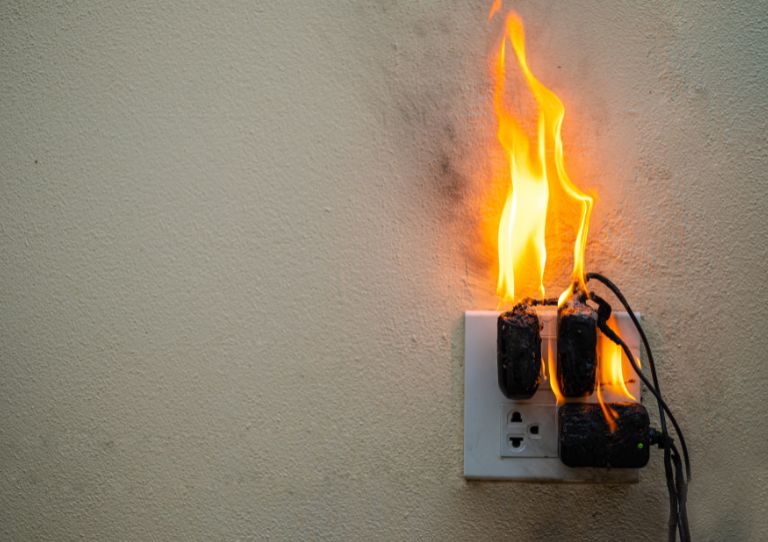
Electrical fires are one of the most serious hazards homeowners can face, and they often start quietly behind walls, outlets, or electrical panels long before anyone notices a problem. Unlike kitchen fires or visible accidents, electrical issues can develop slowly over time, making prevention especially important.
For homeowners throughout the Portland metro area, protecting your home from electrical fires starts with understanding the warning signs, maintaining your electrical system properly, and addressing problems before they become dangerous. Whether your home is decades old or recently built, taking a proactive approach to electrical safety can help protect your property and your family.
Why Electrical Fires Happen
Electrical fires occur when wiring, outlets, panels, or connected devices overheat and ignite nearby materials. In many cases, the problem develops gradually through repeated stress on the electrical system.
Overloaded circuits, loose connections, outdated wiring, damaged cords, and aging electrical panels are some of the most common causes. Older homes are particularly vulnerable because many electrical systems were never designed to handle today’s power demands.
Modern households use significantly more electricity than homes did decades ago. Between large appliances, HVAC systems, home offices, smart devices, and EV chargers, electrical systems are under constant pressure. Without proper upgrades and maintenance, that increased demand can create serious safety risks.
Don’t Ignore Warning Signs
One of the best ways to prevent electrical fires is to pay attention to early warning signs. Electrical systems rarely fail without first showing symptoms that something isn’t right.
Flickering lights, buzzing outlets, frequently tripped breakers, burning smells, or outlets that feel warm to the touch should never be ignored. These issues often point to overloaded circuits, deteriorating wiring, or loose electrical connections hidden behind walls.
If you notice any of these signs, it’s important to have the system inspected by a licensed electrician as soon as possible. Waiting too long can allow a small issue to turn into a major hazard.
Be Careful With Extension Cords and Power Strips
Extension cords and power strips are convenient, but they’re not meant to serve as permanent solutions for overloaded electrical systems.
Many older homes throughout Portland and surrounding communities simply don’t have enough outlets to support modern living. As a result, homeowners often rely heavily on extension cords for everyday use.
Overloading a power strip or using damaged cords increases the risk of overheating and electrical fires. If you consistently need extension cords in certain areas of your home, it may be time to add outlets or dedicated circuits instead of relying on temporary fixes.
Upgrade Outdated Electrical Panels
Your electrical panel is the central hub of your home’s electrical system. If it’s outdated or undersized, it may struggle to safely distribute electricity throughout the house.
Older panels are more likely to overheat, trip frequently, or fail during overload conditions. Some outdated panel brands are also known safety hazards and should be replaced immediately.
A professional panel upgrade improves safety, increases electrical capacity, and helps your home support modern appliances and technology without unnecessary strain.
For many homeowners, upgrading the panel is one of the most important steps in reducing electrical fire risk.
Don’t Overload Circuits
Overloaded circuits are one of the leading causes of electrical overheating. Plugging too many high-powered devices into the same circuit forces wiring to carry more electricity than it was designed for.
This commonly happens in kitchens, garages, entertainment areas, and home offices where multiple appliances or electronics run simultaneously.
Frequent breaker trips are often a warning sign that circuits are overloaded. While breakers are designed to shut power off for safety, repeated trips indicate the system needs attention—not just a reset.
Adding dedicated circuits or redistributing electrical loads can significantly improve safety and reliability.
Schedule Regular Electrical Inspections
Many electrical fire hazards remain hidden until an inspection uncovers them. Wiring behind walls, loose connections, or deteriorating components often show little outward evidence until a failure occurs.
Regular electrical safety inspections help identify these problems early. Inspections are especially important in homes more than 25–30 years old or in homes that have undergone renovations or additions over the years.
A licensed electrician can evaluate your panel, wiring, grounding, outlets, and overall system condition to determine whether upgrades or repairs are needed.
Routine inspections provide peace of mind and help homeowners address concerns proactively rather than during an emergency.
Protect Your Home With Modern Safety Devices
Today’s electrical systems include safety technologies that many older homes simply don’t have.
Ground fault circuit interrupters (GFCIs) help prevent electrical shock in areas exposed to moisture, while arc fault circuit interrupters (AFCIs) help detect dangerous electrical arcing that can lead to fires.
Whole-home surge protection is another valuable upgrade. Power surges can damage wiring and connected devices, increasing long-term electrical stress throughout the home.
Adding these modern protections helps reduce risk and brings older homes closer to current safety standards.
Be Mindful During Renovations and Upgrades
Home renovations often increase electrical demand, especially when adding appliances, lighting, or technology. Unfortunately, some homeowners overlook the need to evaluate the electrical system during these projects.
Installing new kitchen appliances, HVAC systems, EV chargers, or home office equipment without upgrading wiring or circuits can overload older systems.
Whenever you’re planning a remodel or major home upgrade, it’s smart to have the electrical system evaluated at the same time. Addressing electrical needs early helps avoid future safety issues and costly corrections later.
Why DIY Electrical Repairs Can Be Dangerous
While some household projects are safe to handle yourself, electrical repairs are rarely worth the risk. Improper wiring, loose connections, or incorrect installations can create hidden hazards that may not become apparent until much later.
Even seemingly simple repairs can expose larger problems inside older electrical systems.
Working with a licensed electrician ensures repairs are completed safely, properly permitted when required, and compliant with Oregon electrical codes. More importantly, it protects your home and family from avoidable risks.
Protect Your Home With Help From Parkin Electric
Since 1945, Parkin Electric has helped homeowners throughout the Portland metro area keep their electrical systems safe, efficient, and up to modern standards. Our licensed electricians understand the unique challenges older homes present and provide practical solutions that reduce fire risks and improve long-term reliability.
From electrical inspections and panel upgrades to wiring improvements and safety device installations, we help homeowners take proactive steps toward a safer home.
Concerned about your home’s electrical safety? Contact Parkin Electric today to schedule an inspection and protect your home from electrical fire risks.