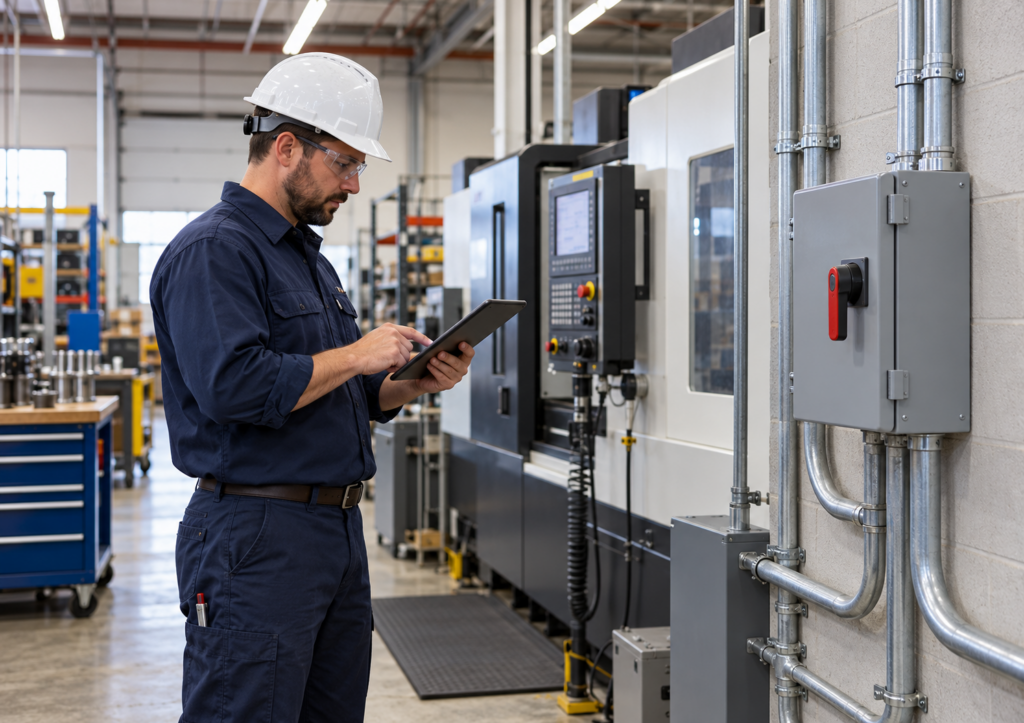
New equipment can help your business increase production, improve efficiency, and better serve customers. Whether you are adding a machine to a workshop, upgrading commercial kitchen equipment, or expanding a manufacturing operation, the right equipment can make a meaningful difference in how your business operates.
Before the equipment arrives, however, it is important to consider how it will connect to your building’s electrical system.
A new machine may require a different voltage, a dedicated circuit, or more electrical capacity than the existing system can provide. Waiting until delivery day to discover these requirements can lead to installation delays, unexpected expenses, and disruptions to your schedule.
Planning ahead with a commercial electrician can help you understand what your new equipment needs and prepare your facility before installation begins.
Here are some of the most important things business owners should know before adding new electrical equipment.
Review the Equipment’s Electrical Requirements Early
Not all commercial equipment operates on the same type of power.
A small piece of office equipment may connect to a standard outlet, while a production machine, commercial appliance, or larger HVAC system may require a specific voltage, amperage, or power configuration.
Some equipment operates on single-phase power, while other machines require three-phase power. The electrical supply in your building needs to be compatible with the equipment you plan to install.
Before purchasing or ordering equipment, review the manufacturer’s specifications with your electrician. Useful information may include:
- Required voltage and phase
- Amperage or power requirements
- Recommended circuit and overcurrent protection
- Connection and disconnect requirements
- Installation instructions
- Any special environmental or clearance requirements
The equipment manufacturer or supplier can usually provide a specification sheet before delivery. Sharing that information early gives your electrician time to identify potential issues and recommend the necessary electrical work.
Confirm That Your Building Has Enough Electrical Capacity
A new machine may fit inside your workspace, but that does not necessarily mean your electrical system has the capacity to support it.
Your building’s electrical service and panels are already supplying power to lighting, computers, heating and cooling systems, and other equipment. Adding another significant electrical load may require a closer look at how much capacity is available.
An electrician can evaluate the existing system, consider the equipment’s requirements, and determine whether the new load can be safely accommodated.
Depending on the situation, the building may have sufficient capacity for a new circuit. In other cases, the project may require changes to the electrical distribution system, a panel upgrade, or coordination with the utility provider.
Evaluating capacity before ordering equipment can help you understand the full scope of the project and plan your budget accordingly.
An Empty Breaker Space Does Not Tell the Whole Story
When looking at an electrical panel, it may be tempting to assume that an unused breaker space means the building is ready for another machine.
However, physical space in a panel is only one consideration. The panel, electrical service, and existing circuits must also have adequate capacity for the additional load.
The type of equipment, how long it operates, and what other systems run at the same time can all affect the evaluation.
A commercial electrician can assess the electrical system as a whole and determine whether the new equipment can be added without overloading existing components.
Determine Whether a Dedicated Circuit Is Needed
Some commercial equipment needs its own circuit rather than sharing power with other devices.
A dedicated circuit supplies a specific piece of equipment or load. Depending on the manufacturer’s requirements and applicable electrical rules, this may be necessary to support safe operation and appropriate protection.
The equipment may also need a specific type of receptacle, a hardwired connection, or a disconnecting means that allows power to be shut off for servicing.
These details vary by equipment and installation. Your electrician can review the manufacturer’s instructions and determine what is appropriate for your project.
Adding the correct circuit and connection from the beginning helps avoid last-minute changes after the equipment arrives.
Choose the Equipment Location Carefully
The location of your new equipment affects more than your floor plan.
The distance between the equipment and the electrical panel, the route for wiring or conduit, and the availability of adequate working space can all influence the installation.
Before finalizing the location, consider:
- How close the equipment is to the available power supply
- Whether wiring or conduit can be routed to the location
- Whether employees can safely operate and access the equipment
- Whether there is adequate space for maintenance
- Whether the area is exposed to moisture, dust, heat, or physical damage
- Whether the equipment may need to be moved as your business grows
Electrical panels and other equipment also need appropriate access and working space. Keeping these areas clear helps support safe operation and maintenance. Occupational Safety and Health Administration
Discussing the proposed location with your electrician before the equipment is delivered can help prevent changes to your layout later.
Do Not Assume Replacement Equipment Has the Same Requirements
Replacing an older machine with a newer model may appear simpler than adding equipment for the first time. However, the new machine may not have the same electrical requirements as the one it replaces.
Even equipment that performs a similar function can differ in voltage, amperage, connection type, or manufacturer instructions. A newer machine may also include additional controls or features that affect its installation.
Before disconnecting the old equipment, provide your electrician with the specifications for the replacement. They can determine whether the existing circuit and connection are suitable or whether changes are needed.
This is particularly important if the original equipment has been in place for many years or the electrical system has been modified since it was installed.
Plan for Permits and Inspections
Depending on the work involved, your installation may require an electrical permit and inspection.
Requirements vary based on the project and local jurisdiction. Adding circuits, modifying electrical systems, or installing certain equipment may involve different requirements than simply connecting a device to an existing, suitable outlet.
Your electrician can help determine what permits are needed and coordinate the electrical work with the applicable inspection process.
It is a good idea to discuss permits early, especially if your business has a firm opening date, production schedule, or equipment delivery deadline.
Allowing time for the necessary approvals and inspections can help prevent a new machine from sitting unused while the remaining work is completed.
Coordinate With Your Equipment Supplier and Other Contractors
Commercial equipment installations often involve more than one company.
Your equipment supplier may handle delivery and setup. A manufacturer’s representative may need to perform startup or calibration. Other contractors may be involved with plumbing, ventilation, compressed air, or structural work.
Clear communication between everyone involved can help prevent important details from being missed.
Before installation, make sure the parties understand:
- Where the equipment will be placed
- Who is responsible for the electrical connection
- When power needs to be available
- What specifications the electrician needs
- Whether other systems must be installed first
- Who will perform startup, testing, and training
Coordinating these details in advance helps keep the project moving and reduces the chance of scheduling conflicts.
Consider How the Work May Affect Your Business
Electrical work sometimes requires power to be shut off temporarily. Depending on the location of the work and the circuits involved, an installation could affect other equipment or parts of your building.
Before work begins, talk with your electrician about any anticipated interruptions and how they might affect employees, customers, or production.
You may need to plan around:
- Business hours
- Production schedules
- Refrigeration or other critical equipment
- Computer systems and network equipment
- Employee access to the work area
- Equipment delivery and startup dates
Your electrician can help you understand the work involved and discuss scheduling options that fit your operation.
Think About Future Equipment Needs
If your business is growing, the equipment you are installing today may not be the last addition you make.
You may plan to add another machine, expand a production line, or move into a larger portion of your building. While it is not always necessary to complete every upgrade immediately, discussing future plans can help your electrician account for them when evaluating the current project.
For example, your electrician may identify opportunities to plan wiring routes, panel capacity, or equipment placement with future needs in mind.
A little planning now can make future improvements easier and help your business avoid repeating work later.
Questions to Ask Before Installation
Before your new equipment arrives, consider asking:
- Is our electrical system compatible with the equipment?
- Does the building have enough capacity to support it?
- Will the equipment need a new circuit or disconnect?
- Is the proposed location appropriate for the electrical connection?
- Are permits or inspections required?
- Will any existing power need to be shut off during installation?
- What information does the electrician need from the manufacturer?
- How long should we allow for the electrical work?
Getting answers to these questions early can help you make informed decisions and develop a more realistic installation schedule.
Get Help Preparing Your Business for New Equipment
Installing new equipment is an investment in your business. Making sure your electrical system is ready is an important part of protecting that investment and getting the equipment into service.
At Parkin Electric, we provide commercial and industrial electrical services, including machine and equipment hookups, for businesses in Oregon City and throughout the surrounding Portland metro area.
Whether you are adding one machine or planning a larger expansion, our electricians can evaluate your electrical needs and help you prepare for a safe, reliable installation.
Planning to install new equipment at your business? Contact Parkin Electric or call 503-657-4958 to discuss your project and request a quote.