Your manufactured home’s electrical system powers the appliances, lighting, heating equipment, and devices you rely on every day. When everything is working as expected, it is easy to overlook what is happening behind the walls or inside the electrical panel.
Over time, however, electrical components can wear out, household needs can change, and previous repairs or additions may need attention. If you are experiencing electrical problems or planning an upgrade, it is important to understand how your home’s electrical system supports the work you want to do.
Manufactured homes can have electrical components and installation details that differ from those in site-built homes. Working with an electrician who understands these differences can help you address problems safely and plan improvements that fit your home.
Here are some of the most important things manufactured home owners should know about electrical repairs and upgrades.
Manufactured Home Electrical Systems Have Unique Considerations
Manufactured homes are built in a factory and transported to their installation site. Depending on the home’s design, age, and previous modifications, its electrical system may include components or connections that require a different approach from those found in a site-built home.
For example, wiring may be routed through the home’s floors, walls, or ceiling in ways that affect how an electrician accesses it. Multi-section homes may also have electrical connections between sections that should be considered when diagnosing a problem.
The electrical service supplying the home, the main panel, and any work completed after installation can also affect how repairs or upgrades are planned.
This does not mean that every manufactured home has electrical problems. It means that the right solution depends on the home’s specific construction and the condition of its existing system.
Older Homes May Need an Electrical Evaluation
Like any home, a manufactured home’s electrical system can change over time.
Outlets and switches may wear out. Wiring can be damaged during renovations. Electrical panels and circuits may have been designed for a household that used fewer appliances and devices than a modern family.
Some homes may also have had repairs or additions completed by previous owners. Without knowing how that work was performed, it can be difficult to determine whether everything is properly connected and suited to the home’s current needs.
The age of your home does not automatically mean it needs to be rewired or have its panel replaced. An electrical evaluation can help identify the condition of accessible components and determine whether any repairs or improvements are recommended.
This can be especially helpful if you have recently purchased an older manufactured home or are planning a renovation.
Pay Attention to Warning Signs
Many electrical problems start with small changes that are easy to dismiss. A light may flicker occasionally, or an outlet may stop working without affecting the rest of the room.
While these symptoms do not always point to a major problem, they are worth investigating when they happen repeatedly or occur alongside other warning signs.
Contact an electrician if you notice:
- Circuit breakers that trip repeatedly
- Outlets or switches that stop working
- Lights that frequently flicker or dim
- Buzzing or crackling near an outlet, switch, or panel
- Discoloration around electrical devices
- Outlets or switches that feel unusually hot
- A burning or melting odor near electrical equipment
These symptoms can have several possible causes, including damaged components, loose connections, or circuits that are carrying too much power. An electrician can identify the source and recommend an appropriate repair.
If you notice smoke, active sparking, or signs of fire, leave the home and call 911. If there is a burning smell or a hot outlet, stop using the affected equipment if you can do so safely and contact an electrician promptly. Do not repeatedly reset a breaker that continues to trip.
New Appliances May Require Electrical Upgrades
Replacing an appliance or adding new equipment may seem straightforward, but it can change the demands placed on your electrical system.
For example, you may be considering:
- A new electric range or dryer
- A heat pump or ductless heating and cooling system
- An electric water heater
- A hot tub
- A home EV charger
- Additional workshop equipment
Before adding equipment, an electrician can review its power requirements and determine whether the existing electrical service, panel, and circuits can support it.
Some installations may require a dedicated circuit, changes to the wiring, or other improvements. In other cases, the existing system may already have sufficient capacity.
The right answer depends on the equipment and the home. A professional assessment can help you understand your options before you purchase or schedule installation.
A Panel Upgrade Is Not Always the First Step
Homeowners sometimes assume they need a new electrical panel whenever they add an appliance or experience a tripped breaker. While an upgrade may be appropriate in some situations, it is not the solution to every electrical problem.
A breaker might trip because of an issue with a particular appliance, a damaged connection, or another problem affecting a single circuit. A new panel would not necessarily resolve the underlying cause.
On the other hand, an outdated, damaged, or insufficient panel may need repair or replacement, particularly when the home’s electrical needs have increased.
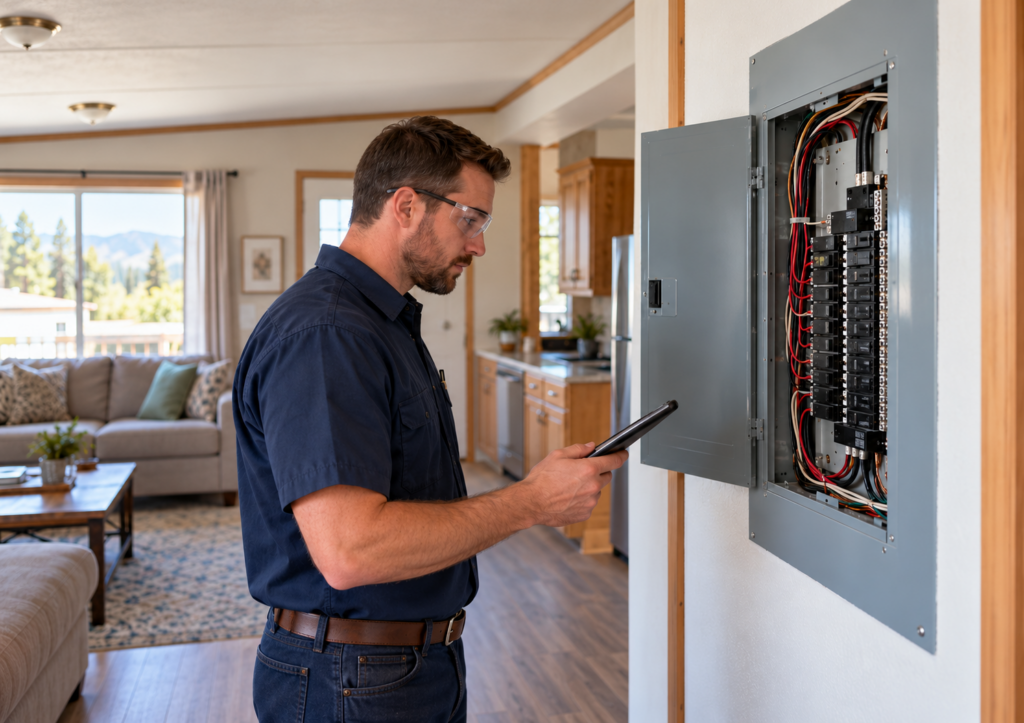
An electrician can evaluate the panel and the rest of the system together. This helps determine whether a targeted repair, a new circuit, a panel upgrade, or another solution makes the most sense.
Previous Additions and Renovations Should Be Considered
Manufactured homes often change over the years. A homeowner may add a porch, install exterior lighting, convert a space into an office, or build a garage or workshop nearby.
Each improvement can affect how electricity is used and distributed throughout the property. If previous work was not properly planned or installed, it may create problems that are not immediately visible.
For example, an addition may rely on a circuit that was not intended to support the extra load. An outdoor outlet or connection may also need attention because of its location or exposure to the weather.
If you are planning a renovation or have questions about work completed by a previous owner, an electrician can review the existing setup before additional changes are made.
Permits and Inspections May Be Required
Electrical repairs and upgrades do not all have the same permit requirements. Whether a permit or inspection is needed depends on the type of work and the local jurisdiction.
For example, Oregon lists many changes to permanent wiring and electrical devices as work requiring a permit, while certain like-for-like repairs may not require one. Your electrician or local building department can help determine what applies to your project. oregon.gov
Manufactured homes may also be subject to requirements related to their construction and installation. Planning for these requirements early can help prevent delays and ensure the work is completed appropriately.
When Should You Schedule an Electrical Inspection?
You do not need to wait for a major electrical problem to have your manufactured home evaluated.
An inspection or electrical assessment may be a good idea if:
- You are buying an older manufactured home.
- You have concerns about previous electrical work.
- Breakers are tripping or outlets are not working consistently.
- You are planning a remodel or addition.
- You want to install a major appliance or other high-demand equipment.
- Your home has not had its electrical system evaluated in many years.
An electrician can look for visible concerns, discuss how you use electricity in the home, and help you understand which repairs or improvements may be appropriate.
Get Help From a Manufactured Home Electrician
Your manufactured home should have an electrical system that supports your household safely and reliably. Whether you are dealing with an electrical problem or planning an upgrade, an experienced electrician can help you make informed decisions about the work.
At Parkin Electric, we provide manufactured home electrical services in Oregon City and throughout the surrounding Portland metro area. Our team can help with electrical panels, outlets, switches, smoke detectors, and other repairs and installations.
Have a question about your manufactured home’s electrical system? Contact Parkin Electric or call 503-657-4958 to discuss your needs and request a quote.